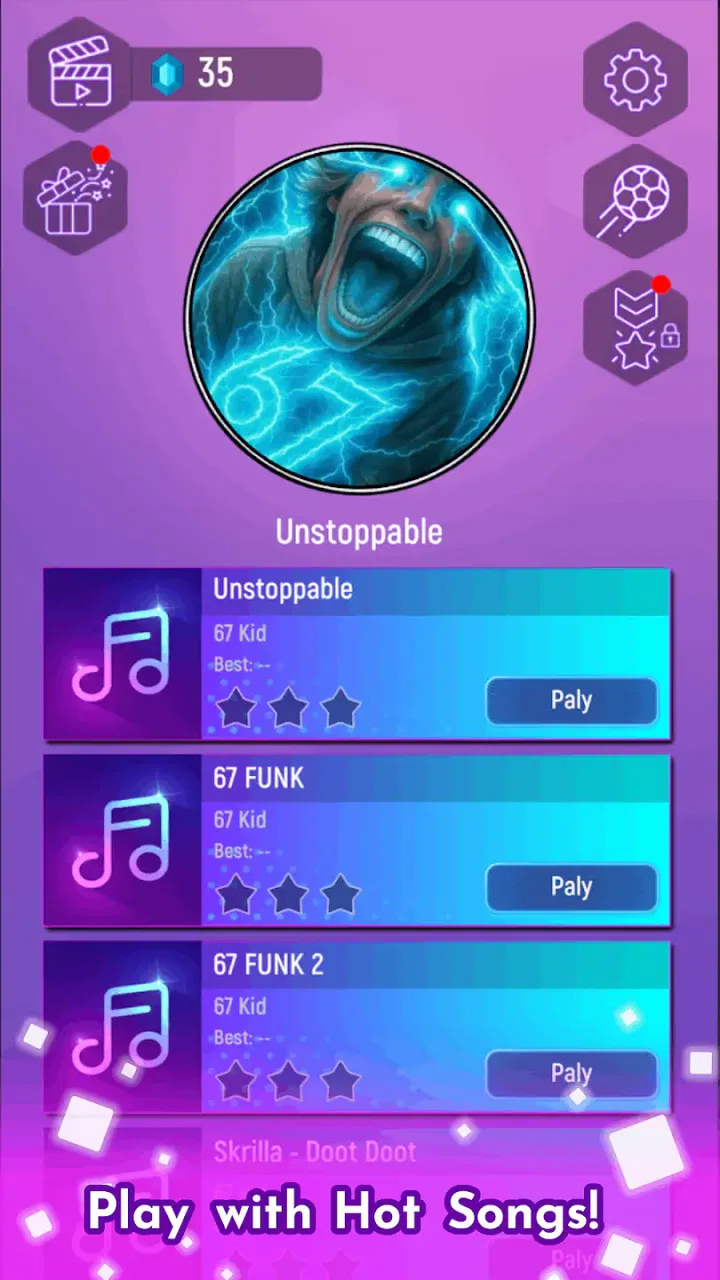
Meme Mason 67 Tiles Music Hop
- 0.0
- Rating
- 50.00K
- Installs
- Free
- Price

 Analysis by App-foxy
Meme Mason 67 Tiles Music Hop is a free music game built around quick reactions, bright timing, and the pressure of keeping up with fast beats. I approached it as the kind of title you open for a short break rather than a long story-driven session, and that expectation matters. Its appeal is immediate: listen, watch the moving rhythm, and try to keep your taps aligned with what the game asks of you.
The game comes from Vitrifactureaze and sits in the music category. It is aimed at Everyone, so the basic concept is easy to understand for younger players as well as adults who enjoy casual rhythm challenges. The current version is 0.0.3, and it runs on Android devices using version 6.0 or later. It is free to play, which makes it simple to try without turning the decision into a purchase.
My overall impression is positive but measured. The fast-beat concept gives it a clear reason to exist, and the short-session format suits moments when I want something active without learning a complicated rule set. At the same time, a new rhythm game can feel unforgiving when the screen, sound, or touch response is not working properly. Before judging the difficulty, I would first make sure the basic setup is behaving correctly.
You May Also Like

 Blood Strike: 2.5 Anniversary
Blood Strike’s Loadouts Turn Every Drop Into a Tactical Gamble
A close look at Blood Strike’s custom loadouts: how fast access to signature weapons reshapes its battle royale rhythm, rewards preparation, and narrows the gap between fights.

 Pandora - Music & Podcasts
Pandora’s Music Is Easy to Start, but Harder to Recover
Pandora’s strength is its low-effort path from a seed to a station. Its weak spot is how much confidence it asks you to place in connection, setup, and quiet recovery.

 8 Ball Pool
 Is Built on Rivalries, Rematches, and Routine
A close look at the rivalries, rematches, shared routines, and unanswered safety questions that turn a quick pool match into a persistent mobile community.

 Samsung Music
’s Quiet Strength Is Playing What You Already Own
Its reach comes less from spectacle than from dependable access to a personal library. That simplicity is both the app’s strongest retention engine and its ceiling.

 AccuWeather: Weather Radar
AccuWeather Review: A Quick, Clear Forecast for Everyday Decisions
For everyday plans, the best forecast is the one you can understand quickly. AccuWeather makes rain timing, radar, and local conditions easy to act on, with a few trade-offs.

 Hill Climb Racing
Why Hill Climb Racing Still Turns Crashes Into One More Run
A tiny car, a bumpy hill and one more upgrade: Hill Climb Racing keeps resurfacing because its simple chaos makes every near-miss feel personal.
More From Our News Desk
View All News


Getting past the first points of friction
The first place players can get stuck is not necessarily the gameplay itself. Rhythm games depend on several things working together: the display must show the action clearly, the touch input must register promptly, and the audio must reach the player without distracting interruptions. If one of those links is weak, a perfectly reasonable challenge can feel unfair.
I recommend beginning with the device held in the position that feels most stable for two-handed play. A loose grip can make taps less precise, especially when the beat accelerates. I also avoid playing while the phone is resting on an uneven surface. The small movement caused by tapping can change how confidently I read the lanes or tiles.
Sound deserves special attention. Because the game is built around fast beats, I would not start with the volume muted unless I already know the visual timing works for me. Headphones may help in a noisy room, but they can also introduce a slight delay depending on the equipment. For a rhythm game, that delay matters more than it would in an ordinary puzzle title. If the taps seem consistently late, I would compare the phone speaker with headphones before deciding that the game itself is the problem.
The most useful early test is consistency, not speed. I would play a short sequence at a comfortable pace and watch whether the same tap position produces the same result repeatedly. If the result changes from one attempt to the next, the issue may be touch control, screen interference, or the way the phone is being held rather than a lack of rhythm skill.
Simple setup checks before blaming the timing
Before starting a serious attempt, I would close other demanding apps and make sure the phone is not busy with a large download or system task. This is not a special requirement of Meme Mason 67 Tiles Music Hop; it is a sensible way to reduce distractions in any fast-tap game. A crowded notification area can also pull attention away at exactly the wrong moment.
Screen cleanliness is surprisingly important. Fingerprints or moisture can make quick swipes and taps feel inconsistent. I usually wipe the display, remove anything that might press against the edges, and then try again with a relaxed grip. A tight grip often creates accidental touches, while a very light grip can make the device shift.
Since the game supports Android 6.0 and later, compatibility is broad enough for many older devices. Still, operating-system support does not guarantee that every phone will feel identical. Screen size, touch sensitivity, speaker quality, and general performance can all affect the experience. On a smaller display, I may find the action easier to focus on but less comfortable for repeated tapping. On a larger phone, the play area can feel more spacious while requiring more finger movement.
If the game opens but the first session feels unresponsive, I would fully close it and launch it again before making a stronger judgment. I would also confirm that the phone has enough free space for ordinary operation and that the device is not unusually hot. Heat can make many games feel less smooth, and it is easy to mistake that temporary slowdown for a flaw in the title.
How I recover when a run goes wrong
A failed rhythm run is not always a sign that the player needs faster reflexes. I separate the problem into three questions: did I see the cue, did I hear the beat, and did the touch register? That small checklist helps identify what to change instead of repeating the same attempt with the same mistake.
If I saw the cue but missed the tap, I focus on reducing finger travel. I keep my hand close to the active area and use small movements rather than reaching across the screen. This is especially useful during rapid passages, where large gestures create their own delay. I also avoid tapping harder than necessary. Force does not improve accuracy and can make the phone move.
If I heard the beat but the visual cue seemed late, I test the audio setup. I switch between the built-in speaker and headphones, lower background noise, and play a few relaxed attempts. The goal is not to chase a perfect result immediately; it is to find the setup in which the beat and visual movement feel naturally connected.
If the screen appears correct but taps are missed randomly, I look at the physical device. A thick case, a screen protector that is not sitting properly, or fingers touching the edge can interfere with comfortable control. I would not remove accessories permanently after one bad attempt, but testing briefly without a troublesome case can reveal whether the phone itself is contributing to the problem.
Another practical habit is to stop after several frustrating attempts. Fast rhythm games encourage the “one more try” loop, but tired hands and divided attention quickly reduce accuracy. A short break can tell me whether the difficulty is genuine or simply the result of fatigue. This is one reason I see the game as a good short-session title: it is easier to enjoy when I do not turn every run into a long endurance test.
When the game may not be the real cause
Performance problems can come from the phone, audio equipment, or environment. If other games also stutter, the device may be under strain. If only the sound feels delayed while visuals remain smooth, the headphones or speaker connection deserves attention. If taps fail across several apps, the screen may need inspection rather than the game being reinstalled repeatedly.
I also consider network conditions carefully without assuming that every problem is online. A brief interruption may affect an app during startup or another connected process, but a missed tap during an otherwise smooth sequence points more toward input or timing. I would restart the game once, check the device connection if the opening process stalls, and then avoid changing several settings at the same time. Changing one thing per test makes the result easier to understand.
Battery-saving modes are another possible source of a less responsive experience on some phones. They can limit background activity or performance, and while that may extend battery life, it is not always ideal for a game that depends on quick reactions. I would try a normal power mode for a short session, then return to the preferred battery setting afterward. This is a practical comparison, not a guarantee that the mode is responsible.
Notifications can be just as disruptive as technical faults. A message banner, vibration, or incoming call can break concentration and make a clean run impossible. For a focused attempt, I prefer a quiet environment and a notification setting that will not cover the play area. This is particularly helpful for children, who may interpret an interrupted sequence as a game failure rather than a distraction.
The age rating of Everyone makes the game approachable for family use, but younger players may still need help with device setup and volume. I would keep the sound at a comfortable level and show them how to hold the phone securely before letting them chase faster patterns. The challenge is suitable for casual play, yet fast reactions can become frustrating if the player is tired or the screen is difficult to read.
What makes the rhythm format worthwhile
The strongest part of this game is its directness. I do not need a long explanation to understand the basic goal, and the music gives each attempt a natural sense of movement. That makes it easy to recommend for a short waiting period, a quick break between tasks, or a relaxed session when I want interaction rather than passive scrolling.
Compared with a traditional puzzle game, the challenge is less about planning several moves ahead and more about staying present. Compared with a larger rhythm title, its attraction is the lighter commitment. I would choose this type of experience when I want to test my timing for a few minutes, not when I am looking for a deep campaign, character progression, or a broad collection of modes.
There is also a useful distinction between visual rhythm games and music players. A music player lets me enjoy a track without pressure, while this game asks me to participate. That makes it more engaging, but also less suitable when I simply want background music. If I am working, traveling in a crowded place, or unable to concentrate on rapid cues, a normal music app is the better option.
The fast-beat focus creates a clear trade-off. It gives successful runs energy and makes small improvements noticeable, but it can make the experience demanding for players who prefer calm, slow-paced games. I would recommend starting with short attempts and treating early misses as information about timing rather than as a final verdict on ability.
Who should try it, and who should skip it
I think Meme Mason 67 Tiles Music Hop is best for players who enjoy quick reflex challenges, music-led interaction, and games that can be understood almost immediately. It also suits people who like practicing a small skill repeatedly. The free price lowers the barrier to trying it, and the broad age rating makes it easier to share with family members who enjoy simple arcade-style challenges.
I would be more cautious about recommending it to someone seeking a large amount of content or a story with long-term progression. The confirmed version is 0.0.3, so I approach it as an early, compact experience rather than a mature platform with years of accumulated depth. That is not automatically negative, but it sets the right expectation: the appeal is the rhythm challenge itself.
Players who are sensitive to rapid flashes, loud sound, or repeated failure should take a slower approach. Use a comfortable volume, take breaks, and stop if the experience becomes tiring. The Everyone rating describes broad suitability, but personal comfort still matters more than a label when deciding how long to play.
It is also not my first choice for a phone with unreliable touch input. A rhythm game cannot hide a damaged screen as easily as a turn-based title can. If the device regularly misses taps elsewhere, I would repair or test the phone before judging the game. On a dependable device, the same challenge has a much fairer feel.
What I would do on a normal day
Imagine I have ten minutes before leaving home. I would open the game, lower distractions, check that the sound is comfortable, and play one warm-up attempt without worrying about a high result. If the taps feel consistent, I would try a more focused run. If the game feels delayed, I would switch the audio output or restart once rather than spending the whole break fighting the setup.
On a longer journey, I would use the same approach but pay closer attention to battery and surroundings. A crowded bus is not ideal for a game requiring precise taps, because movement and noise can affect both concentration and sound. In that situation, I might choose a calmer alternative and return to the rhythm game when I have a steadier seat and fewer interruptions.
For a family session, I would let each person try a short turn and compare how the controls feel on the same device. That can reveal whether a missed sequence comes from the player or from an awkward grip. It also prevents the game from becoming a frustrating contest before everyone understands the timing.
For practice, I would change only one habit at a time: first watch the cues, then listen for the beat, then refine finger placement. This approach is more useful than tapping faster immediately. The non-obvious advantage of a simple rhythm game is that it gives me a clear feedback loop, but that loop works best when I pay attention to the source of each mistake.
My practical verdict after testing the fit
Meme Mason 67 Tiles Music Hop earns a recommendation as a lightweight music game for people who want fast, accessible tap-based play. Vitrifactureaze keeps the concept easy to approach, and the free entry point makes experimentation painless. Its strongest use is as a brief reaction challenge with enough musical energy to make repeated attempts feel active rather than routine.
My recommendation comes with sensible limits. I would not choose it as a replacement for a deep rhythm library, a relaxing music player, or a game designed around long progression. The early version also encourages me to keep expectations focused on the central challenge. If the device has delayed audio, inconsistent touch, or frequent interruptions, the experience can feel worse than it really is.
For the best first session, I would use a clean screen, a stable grip, comfortable volume, and a quiet setting. I would test the phone speaker against headphones if timing feels strange, and I would take a break after repeated misses. Those small choices address the most common sources of friction without overcomplicating the game.
In the end, I see it as an uncomplicated, energetic option for short bursts. If you like fast beats and enjoy improving through repetition, it is worth trying at no cost. If you prefer slower games, extensive content, or perfectly predictable performance on an older device, another category of game may serve you better. For the right player and the right setup, though, its focused rhythm format is easy to pick up and surprisingly satisfying when the taps finally line up with the music.
FAQs for Meme Mason 67 Tiles Music Hop
01What is Meme Mason 67 Tiles Music Hop about?
Meme Mason 67 Tiles Music Hop is a rhythm-based game where players hop a ball across tiles to the beat of popular meme music tracks. The game combines music, memes, and arcade-style gameplay, offering an engaging experience that tests your timing and rhythm skills.
02What platforms is Meme Mason 67 Tiles Music Hop available on?
Meme Mason 67 Tiles Music Hop is available for both Android and iOS devices. You can download it from the Google Play Store or the Apple App Store, ensuring compatibility with a wide range of smartphones and tablets.
03Are there in-app purchases in Meme Mason 67 Tiles Music Hop?
Yes, Meme Mason 67 Tiles Music Hop includes in-app purchases. Players can purchase additional tracks, themes, and other gameplay enhancements. While the game is free to download, these purchases can enhance the overall experience by unlocking exclusive content.
04How does the scoring system work in Meme Mason 67 Tiles Music Hop?
The scoring system in Meme Mason 67 Tiles Music Hop is based on accuracy and rhythm. Players earn points by successfully hopping on tiles in time with the music. The closer you are to the beat, the higher your score. Perfect streaks and combos can lead to bonus points and higher scores.
05Is an internet connection required to play Meme Mason 67 Tiles Music Hop?
While Meme Mason 67 Tiles Music Hop can be played offline, an internet connection is required to access certain features like downloading new tracks and themes. Additionally, online leaderboards and social sharing options are only available when connected to the internet.
Pros
- Engaging music selection enhances gameplay.
- Smooth controls for easy navigation.
- Visually appealing graphics and themes.
- Frequent updates with new content.
- Offline mode available for gameplay anywhere.
Cons
- Contains in-app purchases for premium features.
- Ads can be intrusive during gameplay.
- Limited customization options for tiles.
- Requires significant storage space.
- Not suitable for low-spec devices.

Meme Mason 67 Tiles Music Hop
Gallery